Wilmington Island GA Service Area Emergency Roofing
Barrier island emergency dispatch for luxury waterfront estates, standing seam metal, and hurricane storm damage.
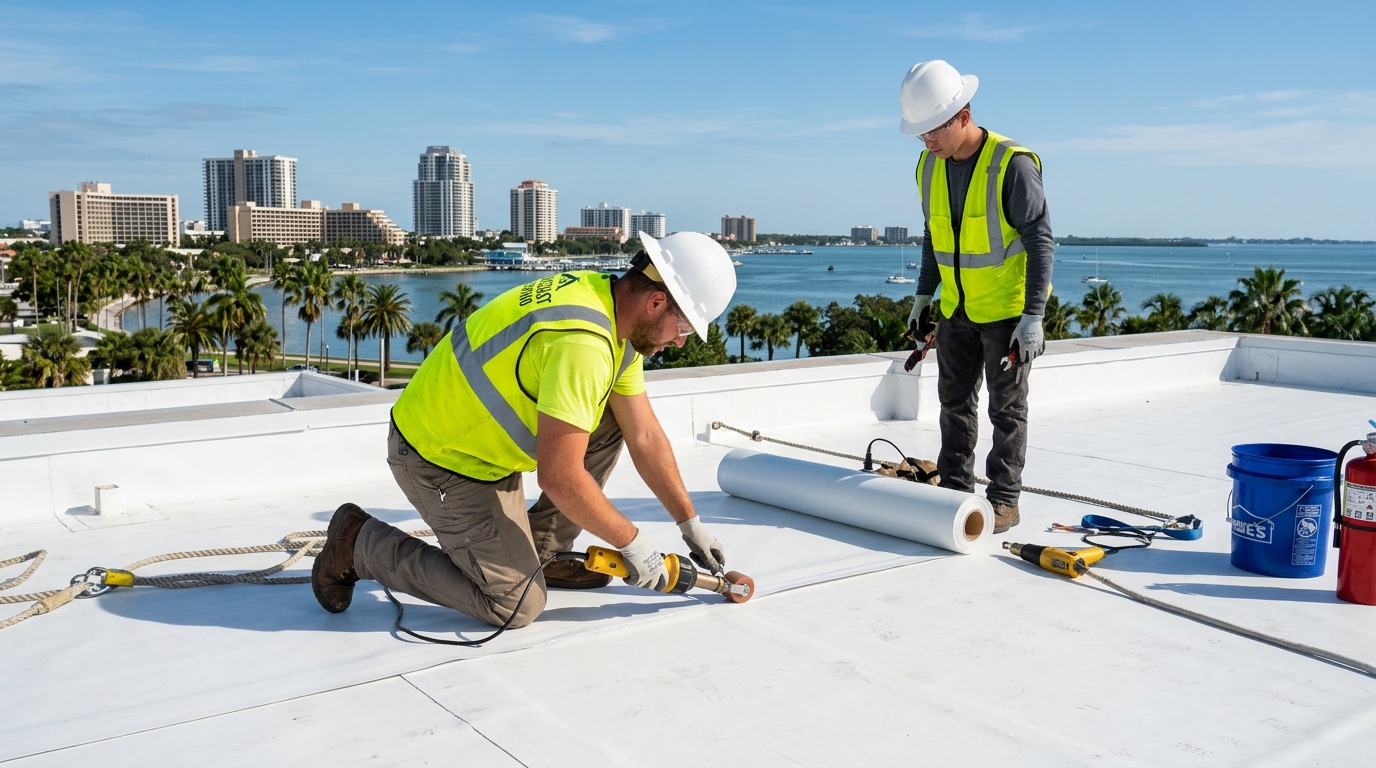
Wilmington Island Barrier Island Service Hub
Wilmington Island properties face intense maritime exposure that accelerates fastener failure. Our dispatch network routes specialized coastal roofing crews equipped with stainless steel hardware.
Dispatched professionals secure wind-damaged metal roof panels, replace salt-corroded nails, and install rafter-anchored poly tarps.
Localized Microclimate & Repair Protocols:
- Marine-grade 304/316 stainless steel fastener replacement.
- Engineered timber-batten tarping withstanding barrier island gales.
- High-definition photo documentation for insurance adjusters.
- Contractor Transparency: Dispatched independent specialists carry verified Georgia contractor licensing, workers compensation, and liability coverage.
Rapid Dispatch Coordination for Wilmington Island GA Service Area Emergency Roofing
During severe Atlantic storms and hurricane warnings, rapid response is critical. Property owners throughout Wilmington Island GA Service Area Emergency Roofing can contact our Savannah dispatch desk 24 hours a day at (888) 208-4155 for immediate triage without web form delays.
Dispatched contractors arrive equipped with heavy-duty timber battens, UV-treated 12-mil poly membranes, and FLIR thermal imaging cameras to secure breached rooflines and document all damage for insurance adjusters.
Need Immediate Wilmington Island Emergency Roofing Response?
Do not let storm rainwater destroy ceilings and structural decking. Contact our Savannah dispatch desk 24 hours a day for rapid response and emergency mitigation routing.
Call Dispatch: (888) 208-41551. Savannah Coastal Hurricane Dynamics & Salt-Air Marine Exposure
Savannah and the coastal Georgia Lowcountry occupy a vulnerable geographical pocket along the South Atlantic Bight. Positioned between the Atlantic Ocean and the extensive tidal salt marshes of Chatham County, properties in Savannah, Tybee Island, Wilmington Island, Pooler, and Richmond Hill endure severe meteorological hazards unmatched by inland regions. Tropical cyclones, hurricanes, nor'easters, and severe sea-breeze squall lines funnel high-velocity gale winds across the barrier islands, subjecting residential and commercial roof planes to extreme negative aerodynamic uplift forces exceeding 80 to 115+ mph.
Compounding hurricane wind pressure is the pervasive marine salt-spray environment. Constant ocean breezes transport corrosive airborne sodium chloride miles inland. Standard electro-galvanized roofing nails, valley transition metals, and steel fasteners suffer accelerated oxidation, shedding protective coatings and rusting to failure within 7 to 10 years. When tropical gales strike, corroded fasteners shear cleanly under pressure, resulting in catastrophic course-by-course shingle uplift, exposed underlayment tear-offs, and immediate water penetration into underlying attic framing.
- Atlantic Hurricane Gale Uplift: Negative pressure vortexes peeling unsealed shingle tabs along windward eaves and rakes.
- Salt-Air Fastener Corrosion: Marine rust shearing nail heads, loosening standing seam metal brackets, and decaying valley pans.
- Horizontal Wind-Driven Torrential Rain: High-pressure deluge forcing water beneath flashing counter-laps and tile interlocks.
- Historic District Slate & Tile Stress: Ancient soft Welsh slate delamination and cracked hand-made clay tiles from windborne debris.
- Porch Roof & Veranda Leak Transitions: Low-slope porch junctions collecting windblown debris and suffering membrane seam failure.
2. Non-Destructive Moisture Diagnostics & FLIR Thermal Tracing
Pinpointing the exact entry point of an active storm leak in coastal Savannah requires forensic scientific instruments. In coastal homes with multi-story framing, high-ceiling Victorian designs, or intricate historic timber rafters, rainwater entering through a compromised ridge vent, chimney saddle, or rusted valley pan rarely drops vertically into the living space. Instead, water tracks silently along sloping rafter chords, down structural balloon-frame studs, and across interior wiring channels before staining plaster or drywall dozens of feet from the breach.
Dispatched emergency contractors utilize calibrated FLIR (Forward-Looking Infrared) thermal imaging cameras combined with non-invasive dielectric radio-frequency moisture meters. Damp structural timber and saturated fiberglass or cellulose insulation exhibit a distinctly colder evaporative thermal footprint compared to surrounding dry substrates. Radiometric thermography maps the entire internal moisture pathway without invasive drywall cuts, pinpointing hidden wet pockets behind historic Savannah lath-and-plaster walls.
- FLIR Thermal Scanning: Full attic and interior ceiling infrared analysis mapping moisture tracks in real time.
- Dielectric Moisture Mapping: Non-penetrating impedance testing establishing precise moisture percentage thresholds.
- High-Definition Borescope Probing: Fiber-optic camera inspection of sealed roof cavities and historic porch overhangs.
- Digital Photo Documentation: Forensic photo and video logs establishing clear baseline proof for insurance claims.
3. Engineered Substrate Restoration, Timber-Batten Tarping & Fastener Upgrades
Emergency storm mitigation in Savannah demands rigorous engineering. Inadequate temporary patches like sandbags, cinder blocks, or thin unanchored blue tarps attached with hand staples are instantly shredded by coastal winds, exposing homes to severe internal mold and structural rot. Dispatched crews implement heavy-duty timber-batten tarping or heat-welded industrial shrink-wrap membranes engineered to withstand 70+ mph gale-force gusts for up to 90 days while permanent repairs are coordinated.
When securing tarps, commercial-grade 12-mil cross-woven poly membranes are rolled around 2x2 kiln-dried spruce battens and mechanically fastened with 3-inch ceramic-coated structural screws directly into underlying rafters. Crucially, on historic slate and clay tile roofs throughout downtown Savannah, Ardsley Park, and the Victorian District, dispatched craftsmen never nail directly through sound historic tiles. Instead, specialty hook ladders and ridge-traversing timber saddles protect delicate fragile tiles while tarps are securely clamped over damaged zones.
- Timber-Batten Rafter Anchoring: Batten-locked 12-mil poly secured with exterior screws (strictly 0 surface staples).
- Marine-Grade Stainless Fastener Retrofit: Replacing corroded steel nails with 304/316 stainless steel ring-shank nails.
- Historic Slate & Tile Preservation: Copper bib flashings and slate hooks utilized to replace shattered tiles without disturbing surrounding slate courses.
- Porch Tie-In Flashing Rebuild: Installing 24-gauge soldered copper or marine-grade aluminum step flashings along brick and wood sidings.
4. Georgia State Minimum Standards (IRC Ch. 9) & Historic Review Board Compliance
Roof restorations throughout Savannah and Chatham County must satisfy stringent multi-layered regulatory standards. Under the Georgia State Minimum Standard Building Code (International Residential Code Chapter 9 with Georgia DCA amendments), coastal Chatham County is designated as an enhanced high-wind hurricane zone with design wind speeds between 120 and 130 mph. Code mandates that all asphalt shingles be installed using an enhanced 6-nail high-wind fastening pattern, heavy corrosion-resistant metal drip edges must be fastened along all eaves and rakes, and self-adhering polymer-modified bitumen ice-and-water underlayment must line all valleys and low-slope transition joints.
Additionally, within the Savannah Historic Landmark District and the Victorian District, exterior alterations are strictly regulated by the Savannah Historic District Board of Review and the Chatham County-Savannah Metropolitan Planning Commission (MPC). Visible rooflines, slate dimensions, terne-coated metal profiles, and copper gutter transitions must maintain rigorous architectural fidelity. Dispatched contractors possess specialized knowledge of historic preservation guidelines, ensuring all emergency mitigations and subsequent restorations comply fully with municipal historical covenants and state licensing mandates.
- GA DCA 130 MPH Wind Mandate: 6-nail fastening patterns and ASTM D3161 Class F high-wind shingle certifications.
- Coastal Metal Drip Edge Requirement: Approved corrosion-resistant drip edges mechanically fastened along eaves and gables.
- Savannah Historic Review Board Compliance: Architectural material matching for historic slate, clay tile, and standing seam copper.
- Licensed Georgia Contractors: Dispatched roofing partners carry verified Georgia state licenses, general liability, and workers comp.
5. Preventative Property Maintenance & Coastal Storm Preparedness
In coastal Georgia's humid, salt-rich climate, proactive roof maintenance is essential to preserving property value and structural integrity. Homeowners across Savannah, the barrier islands, and coastal suburbs should implement semi-annual inspections—specifically before the Atlantic hurricane season begins in June and immediately following peak storm activity in late autumn. Clearing massive live oak branches, spanish moss accumulations, and pine needle mats from valleys and internal gutter lines prevents moisture dams that cause rot along fascia boards and sub-fascias.
Furthermore, inspecting plumbing vent pipe boots, skylight perimeter seals, and chimney mortar crowns every 12 to 18 months allows property owners to replace sun-baked rubber gaskets and degraded sealant strips before torrential tropical rains force water inside. Dispatched roofing technicians can conduct comprehensive preventative surveys, identifying unsealed shingle tabs and rusted fasteners before the next coastal storm strikes.
- Pre-Hurricane Fastener Audit: Check standing seam clips and edge shingles for salt corrosion or loose nails.
- Live Oak & Pine Clearance: Prune overhanging tree branches at least 10 feet back from roof surfaces.
- Low-Slope Porch Inspection: Inspect flat porch transitions and scuppers for debris blockage and standing water.
- Historic Flashing Inspection: Verify chimney counter-flashings and valley pans are intact and leak-free.